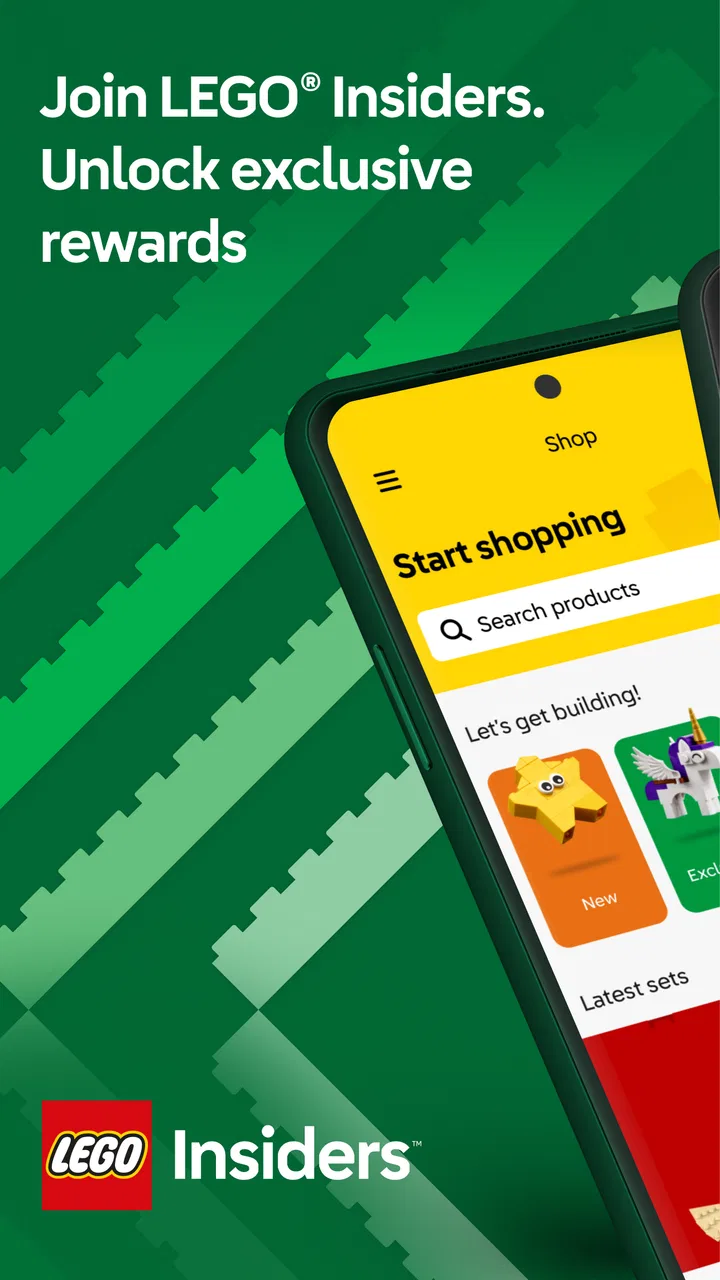
LEGO® Insiders: Shop & Rewards
- 4.8
- Rating
- 1.00M
- Installs
- Free
- Price

 Analysis by App-foxy
I approached LEGO® Insiders as a shopping companion rather than another app I would open once and forget. Its purpose is closely tied to the LEGO buying experience: it brings membership activity, points, rewards, and special perks into one place. That sounds simple, but the real question is whether it remains useful after the excitement of joining has passed. In my experience, the answer depends heavily on how often you buy LEGO products and whether you are willing to make membership tracking part of your routine.
The app is free, aimed at everyone, and developed by LEGO System A/S. It belongs in the shopping category, although it feels less like a conventional product browser and more like a loyalty account with shopping-related benefits attached. The store summary presents it as a place to collect points, redeem rewards, and access member-only advantages. I found that framing accurate, but it also sets the right expectation: this is not designed to replace every part of the LEGO shopping journey.
After installing it, I would not judge its value by the first few minutes alone. The initial appeal comes from seeing the account side of LEGO organized in a dedicated space. The longer-term value comes from remembering to use it when buying, checking what has accumulated, and deciding whether the available rewards are worth the attention. That distinction matters because a loyalty app can be pleasant without becoming essential.
You May Also Like

 Blood Strike: 2.5 Anniversary
Blood Strike’s Loadouts Turn Every Drop Into a Tactical Gamble
A close look at Blood Strike’s custom loadouts: how fast access to signature weapons reshapes its battle royale rhythm, rewards preparation, and narrows the gap between fights.

 Pandora - Music & Podcasts
Pandora’s Music Is Easy to Start, but Harder to Recover
Pandora’s strength is its low-effort path from a seed to a station. Its weak spot is how much confidence it asks you to place in connection, setup, and quiet recovery.

 8 Ball Pool
 Is Built on Rivalries, Rematches, and Routine
A close look at the rivalries, rematches, shared routines, and unanswered safety questions that turn a quick pool match into a persistent mobile community.

 Samsung Music
’s Quiet Strength Is Playing What You Already Own
Its reach comes less from spectacle than from dependable access to a personal library. That simplicity is both the app’s strongest retention engine and its ceiling.

 AccuWeather: Weather Radar
AccuWeather Review: A Quick, Clear Forecast for Everyday Decisions
For everyday plans, the best forecast is the one you can understand quickly. AccuWeather makes rain timing, radar, and local conditions easy to act on, with a few trade-offs.

 Hill Climb Racing
Why Hill Climb Racing Still Turns Crashes Into One More Run
A tiny car, a bumpy hill and one more upgrade: Hill Climb Racing keeps resurfacing because its simple chaos makes every near-miss feel personal.
More From Our News Desk
View All News


What makes the first week appealing
The first week is when the app feels most rewarding. I could immediately understand its basic role without needing to learn a complicated interface: this is where membership activity and rewards belong. For someone already interested in LEGO purchases, that focus is welcome. Instead of treating points as an invisible part of an account, the app gives them a more visible home and makes the idea of earning and redeeming feel concrete.
The strongest early use case is preparing for a planned purchase. If I am already considering a set, opening the app before shopping helps me remember that the membership account should be part of the transaction. That small prompt can be more valuable than any decorative feature. Loyalty programs often lose their usefulness because people remember them only after checkout; a dedicated app creates a natural place to check first.
I also see clear appeal for parents and gift buyers. A person who buys LEGO several times a year may not want to study a full shopping website every time. A focused membership app can serve as a quick checkpoint before a birthday purchase, a holiday order, or a personal build. It is also relevant to collectors who make deliberate purchases and want their account activity kept alongside their shopping habits.
One practical tip is to treat the app as part of the buying checklist rather than as entertainment. I would open it before deciding where and how to buy, review the account area, then complete the purchase with the membership benefit in mind. That workflow is more reliable than installing it and assuming the app will automatically make every purchase more valuable.
The app’s average rating is 4.8 from around 1.2 thousand ratings, and it has passed 500 thousand installs. Those figures suggest that the basic proposition is connecting with a meaningful audience, but they should not be mistaken for proof that every user will return regularly. A loyalty app can be well received while still being unnecessary for people who buy only occasionally.
Where the novelty is genuinely useful
The early satisfaction comes from reducing mental friction. I do not have to remember every detail of the membership program while browsing or planning a purchase. The app gives the account a distinct identity, which makes points and rewards feel easier to manage than when they are buried inside a broader store experience.
That separation is especially helpful if I use LEGO’s shopping experience for different reasons. A normal store page is mainly about finding products, comparing options, and completing an order. The companion app’s role is different: it encourages me to think about the value attached to being a member. I would not use it as my only tool for researching sets, but I would use it as a reminder to capture the membership side of the transaction.
There is also a psychological advantage to seeing progress in one place. Even when the reward itself is modest, visible progress can make a future purchase feel more connected to previous ones. This is a subtle benefit, not a reason to spend more than planned. I would never recommend buying a set merely to chase points, but for a purchase I already intended to make, the membership layer can make the process feel more complete.
Why month-to-month value depends on your buying pattern
After the first month, the app’s value becomes much less universal. Frequent LEGO shoppers have a reason to return because each purchase can keep the account relevant. Occasional buyers may open it before a purchase and then ignore it for long stretches. That is not necessarily a flaw; it is simply the nature of a shopping loyalty tool. Its usefulness follows spending activity rather than creating a daily habit on its own.
I think the best long-term users fall into three groups. The first is the regular builder who buys sets often enough for points and rewards to matter. The second is the collector who wants a clearer relationship between purchases and membership benefits. The third is the organized gift buyer who appreciates having a repeatable process before major shopping occasions.
For everyone else, the app may be better viewed as an occasional utility. If I buy one LEGO set every few years, I would not expect a permanent place on my home screen. I could still install it when I am preparing for that purchase, use it to review the membership side, and remove it afterward if I do not need ongoing access. That is a perfectly reasonable way to use a free app.
The recurring value is not just the act of collecting points. It is the possibility of making membership benefits part of a consistent buying routine. I would check the app before shopping, after a purchase when appropriate, and whenever I am considering redemption. That three-step pattern prevents the account from becoming something I remember only when it is too late.
A useful trade-off appears here: the app can make planned LEGO spending feel more rewarding, but it can also encourage me to think about another purchase when I was not shopping at all. I would keep notifications and browsing under control if I were trying to avoid impulse buying. A loyalty system should support purchases I already want, not become a reason to manufacture them.
How it compares with ordinary shopping alternatives
A regular LEGO shopping website is usually the better choice when my main goal is product discovery. Websites are naturally suited to scanning a large catalog, reading product information, and moving directly toward checkout. The dedicated app earns its place by focusing attention on the member account, points, rewards, and perks rather than trying to be a complete replacement for every shopping surface.
A general shopping app may be more convenient for comparing sellers, checking unrelated products, or managing several brands in one place. LEGO® Insiders is narrower, but that narrowness is also its strength. If I want LEGO-specific membership value, a focused account experience is easier to understand than a general marketplace where loyalty details can disappear among many other functions.
For a person who already uses a password manager or browser shortcuts, the app may not feel dramatically faster than visiting the relevant LEGO account pages. The advantage is less about revolutionary convenience and more about having a dedicated destination. Whether that deserves storage space depends on how often I use the membership program.
The maintenance burden is small, but not zero
The app is free, which removes the most obvious barrier to keeping it installed. Its content rating is Everyone, so it is positioned for a broad audience rather than a narrowly defined adult shopping group. Still, free does not mean frictionless. I have to remember the app, keep my account accessible, and make a conscious effort to use it at the right point in the shopping process.
The biggest maintenance task is behavioral: remembering to check before buying. An app cannot create value if I complete every purchase without considering the membership account. This is why I would place it near other shopping tools rather than in a folder I never open. The app’s usefulness is tied to timing, and timing depends on a simple personal habit.
There is also a maintenance question around reward redemption. Collecting is easy to understand, but redemption requires a decision. I would avoid treating every reward as automatically worthwhile. Before using points, I would consider whether the available option fits a purchase I already planned or whether I am being pushed toward spending merely to justify the reward. That pause is an important part of using a loyalty app sensibly.
The current version is 1.8.1, and the app supports Android 7.0 and later. That broad compatibility is helpful for people who keep an older Android phone, although I would still keep the app updated when updates are available. Loyalty and shopping apps handle account-related activity, so using a current version is a sensible maintenance habit even when the interface seems to work perfectly.
I would also make sure I use the same membership account consistently. Splitting shopping activity between different sign-ins would undermine the whole point of having a central record. This is one of the less obvious workflow details: the app can only be a reliable account companion if I treat the account identity as carefully as I treat the purchase itself.
Small habits that make the app more useful
My recommended routine is deliberately simple. Before a LEGO purchase, I would open the app and check the membership area. Afterward, I would return when the transaction should be reflected in the account, then review the balance before deciding whether to redeem anything. This avoids both extremes: ignoring the app completely and checking it obsessively.
For gift shopping, I would use a separate note outside the app to record who the purchase is for and when it is needed, while using the app only for membership-related tasks. That separation prevents the loyalty account from becoming a substitute for a complete shopping organizer. It also makes it easier to judge whether a reward is genuinely useful for the gift purchase.
For collectors, the app may work best as a financial pause button. Before buying a set, I would ask whether I wanted the set anyway, whether the reward changes the timing, and whether redeeming points now is better than saving them. Those questions turn the app from a promotional prompt into a decision aid.
Where fatigue can set in
The first source of fatigue is repetition. If I am not buying LEGO, there may be little reason to open a shopping-focused membership app. Over time, the icon can become background clutter unless I connect it to a real purchase routine. This is the central weakness of the product: its usefulness is meaningful but episodic.
The second source is reward expectation. Points and perks sound attractive, but their practical value depends on what I want to buy and when I want to redeem them. If the reward does not fit my plans, the balance can feel like an unfinished task rather than a benefit. I would rather let points accumulate for a suitable use than force a redemption simply because the option is visible.
Another possible frustration is the division between membership management and product research. I may need the app for the account side and another LEGO shopping surface for detailed browsing. That is not automatically bad, but it means the app does not simplify every part of the journey. Users expecting one complete destination for discovery, comparison, membership, and checkout may find the experience less streamlined than anticipated.
The app can also become tiring if I allow loyalty thinking to dominate normal purchasing decisions. The most responsible approach is to set a shopping budget first and consider points second. In my view, the app is at its best when it adds value to an intended purchase. It is at its weakest when the existence of a reward makes an unnecessary purchase seem sensible.
There is a further trade-off for households. A family may have several people buying or receiving LEGO, but the membership value depends on how consistently the account is used. I would agree on one account workflow before making purchases, especially if more than one person handles shopping. Without that coordination, the app may feel confusing even though its purpose is straightforward.
Who should skip it
I would skip installing it permanently if I rarely buy LEGO, do not care about member perks, or prefer to keep shopping activity inside a browser. The free price makes trying it harmless, but storage space and attention are still limited resources. A person who wants only to browse sets may get more from the ordinary LEGO shopping experience.
I would also hesitate if loyalty programs make me spend more than planned. No points balance can compensate for buying something I do not need. In that situation, the app is better used only immediately before a planned purchase, or not used at all. The right tool is the one that supports my priorities rather than changing them.
On the other hand, I would recommend keeping it installed for regular buyers who want a dedicated place for collecting points and reviewing rewards. The app is particularly sensible for people who already think of LEGO purchases as an ongoing hobby rather than isolated transactions. Its recurring value grows with that continuity.
Does it earn lasting space?
My long-term verdict is positive but selective. LEGO® Insiders earns lasting space on my phone when I buy LEGO regularly enough to make membership activity part of my normal shopping cycle. In that situation, the app gives points, rewards, and member perks a clear home, and the habit of checking before purchases is easy to maintain.
It does not earn permanent space simply because it is well made or free. For occasional buyers, it is more practical as a temporary tool: install it for a planned purchase, use it to manage the membership side, and decide later whether continued access is worthwhile. That is not a criticism of the app; it is an honest match between the product’s design and the user’s buying frequency.
LEGO System A/S has created a focused shopping app rather than a broad entertainment product. I appreciate that focus because it makes the purpose easy to understand, but it also limits the number of reasons to return between purchases. The app’s lasting strength is consistency, not novelty. It rewards users who build a repeatable process around buying, tracking, and redeeming.
My practical recommendation is to install it if you have a LEGO purchase coming up and want to take membership benefits seriously. Use it before shopping, keep your account workflow consistent, and do not let rewards override your budget. If those habits fit your life, the app can become a useful part of the LEGO experience. If they do not, the usual shopping website may be all you need.
At no cost and with an Everyone age rating, it is easy to test without much commitment. Just judge it after the first excitement fades. If you still open it before purchases and find the rewards worth managing, it has earned its place. If it sits untouched between occasional builds, removing it is perfectly reasonable. For me, that makes it a worthwhile specialist tool, but not an essential shopping app for every LEGO fan.
FAQs for LEGO® Insiders: Shop & Rewards
01What is LEGO® Insiders: Shop & Rewards?
LEGO® Insiders: Shop & Rewards is an app designed to enhance the shopping and brand experience for LEGO enthusiasts. It offers users the ability to shop for LEGO sets, earn rewards, and access exclusive content and promotions. The app aims to create a more engaging experience for LEGO fans by integrating a loyalty program.
02How does the rewards system work on LEGO® Insiders?
The rewards system in LEGO® Insiders allows users to earn points through purchases and participation in activities within the app. These points can be redeemed for exclusive discounts, special offers, and limited-edition LEGO products. The app also offers challenges and activities to earn additional rewards, making it a fun way to engage with the brand.
03Is LEGO® Insiders: Shop & Rewards free to use?
Yes, the LEGO® Insiders: Shop & Rewards app is free to download and use. While the app itself does not require payment, purchasing LEGO products through the app will incur regular retail charges. The app aims to enhance the LEGO shopping experience by offering additional benefits and exclusive content at no extra cost.
04Can I use LEGO® Insiders on both Android and iOS devices?
Absolutely! LEGO® Insiders: Shop & Rewards is available for download on both Android and iOS platforms. Users can find the app on Google Play Store and Apple App Store. This cross-platform availability ensures that LEGO fans can enjoy the app’s features regardless of their device preference.
05What type of exclusive content can I access through the app?
LEGO® Insiders: Shop & Rewards offers a variety of exclusive content, including early access to new LEGO sets, special promotions, and insider news. Users can also participate in app-only events and challenges. This exclusive content is designed to provide a richer and more immersive experience for dedicated LEGO fans.
Pros
- User-friendly interface enhances navigation.
- Loyalty rewards encourage regular purchases.
- Wide selection of LEGO sets available.
- Early access to new releases for members.
- Exclusive discounts for Insiders.
Cons
- Requires account creation to access features.
- Limited to LEGO brand products only.
- App updates can be infrequent.
- No offline mode for browsing sets.
- Rewards may take time to accumulate.

LEGO® Insiders: Shop & Rewards
Gallery